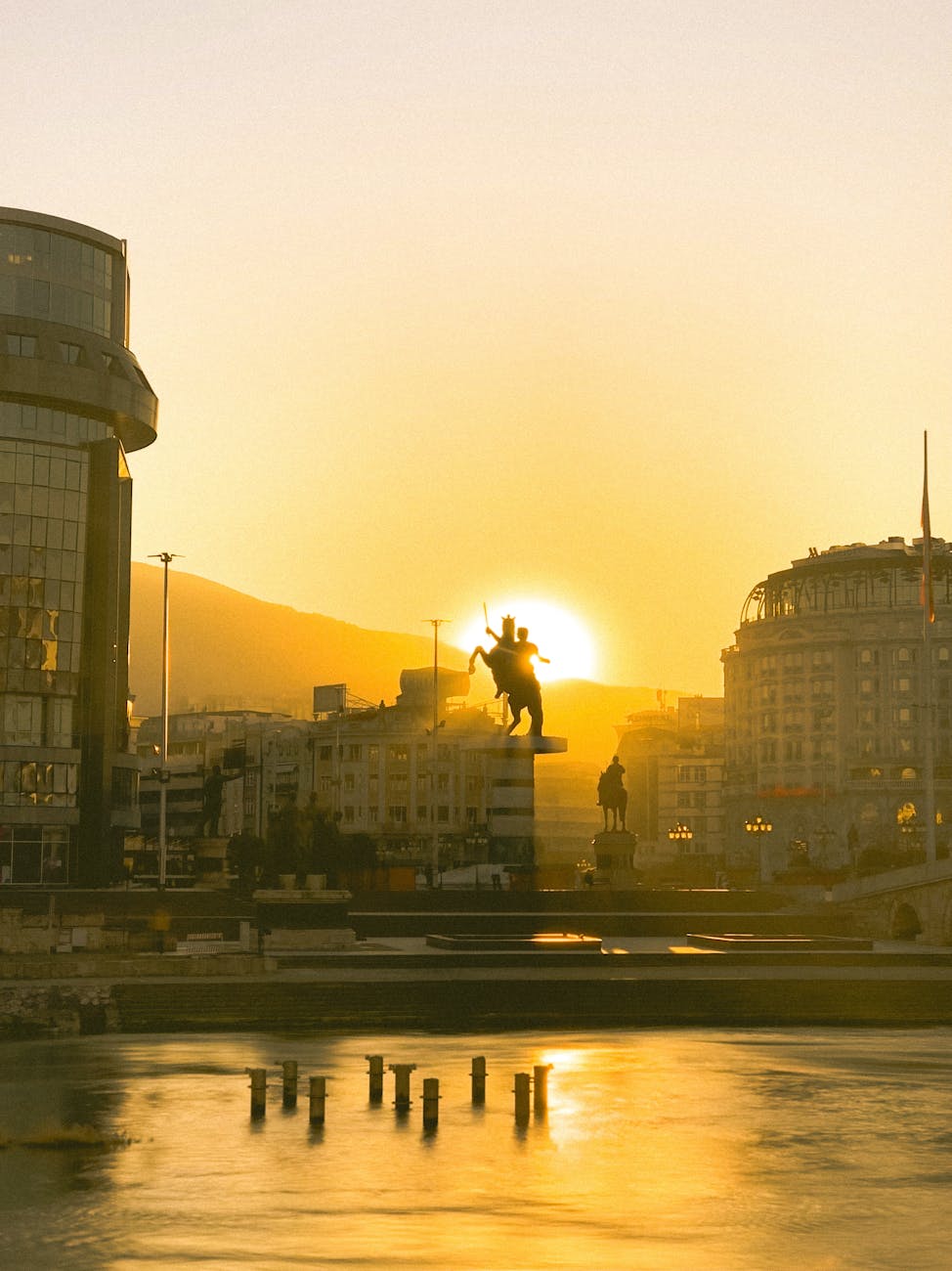
Here are the Top 5 Things Foreign Powers Have Tried (or Still Try) to Make Macedonia Do and what they reveal about the ongoing struggle for truth, sovereignty, and self-respect.
1. Change Its Name (and Identity)
The most infamous example is the Prespa Agreement, where Greece forced Macedonia to adopt the name “North Macedonia” in 2019. This was not just a diplomatic compromise — it was a symbolic blow to the nation’s identity.
For decades, Greece claimed the name “Macedonia” as its own and blocked Macedonia’s membership in NATO and the EU unless the country agreed to change it. The result? A country had to negotiate its very name just to be recognized.
💬 Imagine being told by another country what you’re allowed to call yourself.
Despite the name change, the people still call themselves Macedonians, and the language is still Macedonian. But the pressure to rewrite identity hasn’t gone away.
2. Deny the Existence of the Macedonian Language
Some foreign powers — notably Greece and Bulgaria — have gone so far as to claim that the Macedonian language doesn’t exist.
- Bulgaria insists that Macedonian is simply a “dialect of Bulgarian.”
- Greece refuses to recognize the Macedonian language at all, and for decades banned its use, even among its own citizens of Macedonian descent.
This linguistic denial is not based on scientific linguistics, but on political denial of identity.
📚 A language isn’t defined by what others allow — it’s defined by the people who speak it, pass it on, and live it.
Today, Macedonian is recognized by the UN and spoken by over 2 million people. Yet, the pressure to erase it continues in subtle ways — through academic disputes, treaty conditions, and foreign “advice.
3. Rewrite Its History to Fit Others’ Narratives
From ancient times to modern history, Macedonia’s story has been distorted by its neighbors:
- Ancient Macedonia has been absorbed into Greek history, ignoring its distinct language, culture, and identity.
- Bulgaria claims much of Macedonian revolutionary history as their own — including heroes like Goce Delčev, whom they call Bulgarian, even though he died fighting for a free Macedonia.
- Foreign historians and academics often ignore Macedonian sources, or dismiss them as “nationalist,” while treating Greek or Bulgarian sources as “objective.”
This selective history-writing serves political agendas — not historical truth.
🛑 When your identity is being debated in someone else’s parliament, that’s not history. That’s control
4. Accept EU Membership at Any Cost — Even National Dignity
The path to the European Union has been long, and for Macedonia, it’s been filled with unfair conditions.
Instead of being judged on democratic reforms, economy, or rule of law, Macedonia is told:
- “Change your constitution.”
- “Change your history books.”
- “Recognize someone else’s version of your identity.”
In 2022, Bulgaria pressured the EU to demand changes to how Macedonian history is taught — and even asked Macedonia to include Bulgarians in its Constitution, just to begin accession talks.
📝 No other EU candidate country has faced these kinds of identity-based demands.
EU integration is important — but it should never come at the price of historical and cultural erasure.
5. Be Silent About Its Own Diaspora and Minorities Abroad
Macedonians living in Greece, Bulgaria, Albania, and Serbia face systematic denial of their identity:
- In Greece, ethnic Macedonians still cannot register cultural associations under the name “Macedonian.”
- In Bulgaria, speaking or identifying as Macedonian can lead to social and legal consequences.
- In Albania, Macedonians are often grouped with other minorities and rarely represented politically.
Foreign powers want Macedonia to stay silent about its own people living outside its borders — to avoid “offending” their neighbors.
But no sovereign country should be forced to abandon its own citizens in the name of diplomac
Conclusion: Macedonia Has the Right to Be Itself
From its name, language, and history to its place in Europe, Macedonia has been under constant pressure to conform to other people’s expectations.
But here’s the truth:
- Macedonia has always existed — long before modern borders.
- Macedonian identity is not up for negotiation.
- Foreign powers don’t get to define what it means to be Macedonian.
This country — and its people — have survived empires, occupations, censorship, and denial. And they’re still here.
The world doesn’t need another version of someone else’s story. It needs Macedonia’s truth — told by Macedonians.
 Rebus Macedonicorum
Leave a comment